
The respectable woman
The role of misogyny in Northern Ireland, past and present
Femicide
Elizabeth ‘Betty’ Dobbin, Natasha Melendez, Emma Jane McParland, Patrycja Wyrebek, Katie Simpson, Susan Baird, Karen McClean, Stacey Knell, Ludmila Poletelova, Kathleen ‘Katie’ Brankin, Katrina Rainey, Caoimhe Morgan, Alyson Nelson, Margaret Una Noone, Hollie Thomson, Natalie McNally, Alesia Nazarova, Chloe Mitchell, Kathryn ‘Kat’ Parton, Patricia ‘Patsy’ Aust, Sophie Watson, Montserrat Elias, Rachel Simpson, Mary Ward, Karen Cummings, Mary ‘Marie’ Green, Sarah Montgomery, Vanessa Whyte, Ellie Flanagan, Amy Doherty.
The names of 30 women killed in Northern Ireland since 2020. The victims in the place with the UK’s highest rates of femicide, where women are at almost double the risk of being victims compared to the rest of the UK.
Many of these women knew the people that killed them in violent, misogynistic attacks. They were their partners, brothers, sons, friends.
At a vigil for Amy Doherty, Ciara O’Connor-Pozo, an activist with Alliance for Choice described the event as emotional but not uncommon for the country.
“We’ve had more than 30 women and girls murdered in this kind of violence since 2020. We’ve sadly stood here on these steps many times before and to be honest it doesn’t get any easier.
“I think it’s so important to show our solidarity to the families and to give the city space to grieve together and call attention to this issue.”
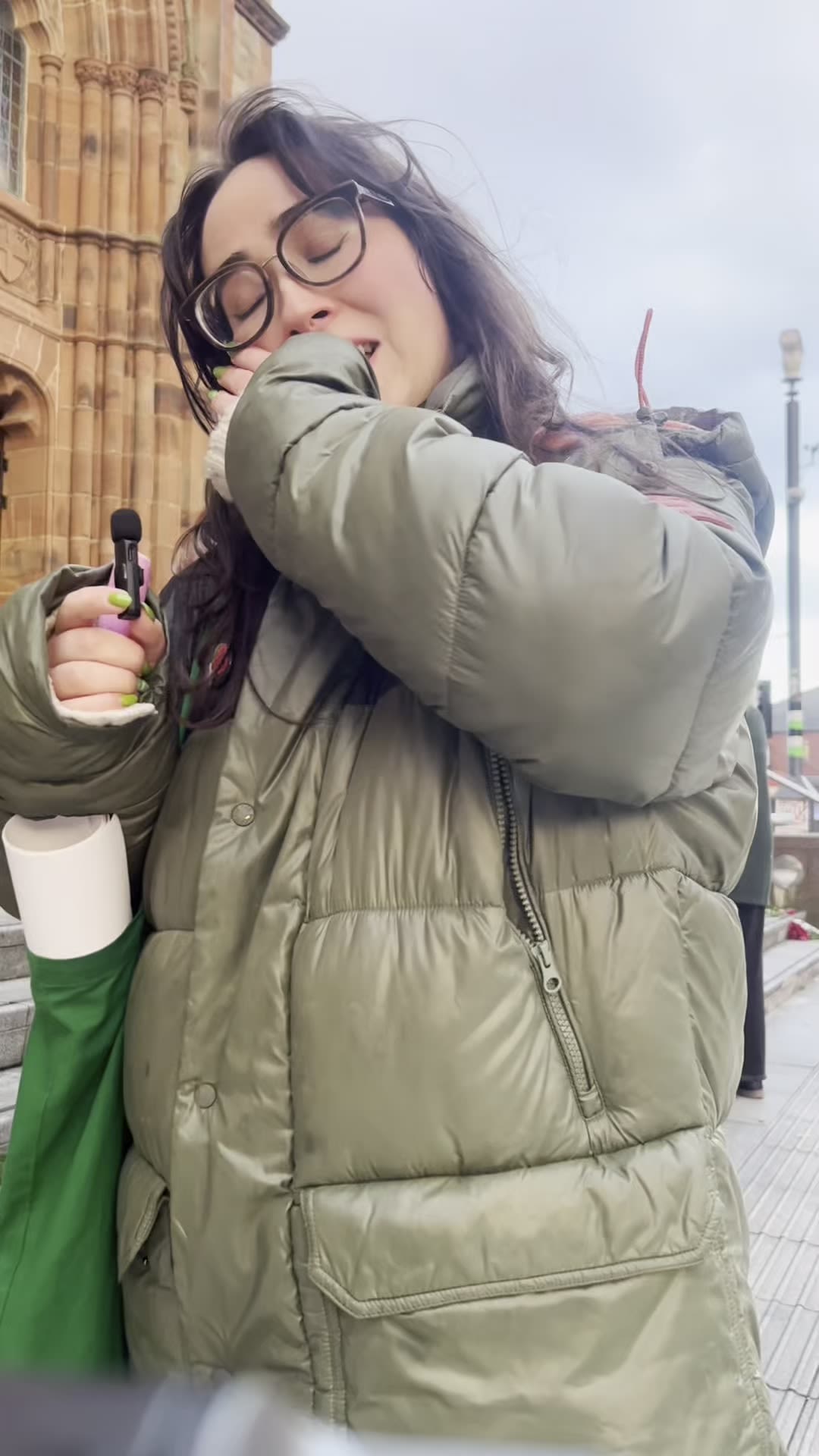
Ciara O'Connor-Pozo at a vigil for Amy Doherty
Ciara O'Connor-Pozo at a vigil for Amy Doherty
Misogyny is defined as the hatred of, contempt for or prejudice against women or girls, and is prevalent on a systemic and cultural level in the North.
Femicide is the intentional killing of a woman based on her gender. It is the most brutal consequence of a society that allows for misogyny to continue without accountability.
Research carried out by Ulster University and IMPACT Research Centre suggests that 98% of women in Northern Ireland have experienced at least one form of violence or abuse in their lifetime.
With the staggering number of domestic abuse cases and the growing rate of femicide in the country, the people, women’s rights activists and politicians are urging the government to implement safety protocols for women.
"Fallen women"
The issue of violence against women and girls on the island of Ireland is not new. For centuries women have been subject to misogynistic violence. 1765 marked the opening of the first Protestant-run Magdalene Laundry in Dublin. These institutions were designed to punish and employ women deemed “fallen”.
The victims were incarcerated with no release date, forced to work for no pay, were physically and mentally abused, and stripped of any sense of identity. Many of these women were unwed mothers, victims of incest or sexual abuse or prostitutes, viewed as promiscuous and immoral by the country’s standards.
The first Catholic-run Laundry opened in 1810 in Cork and conditions were much the same.
These laundries were allowed to remain open for over a century, until the last one was closed in Dublin in 1996. Victims were still living there, with some having been imprisoned for decades.
It is estimated that over 30,000 women and girls were sent to the laundries across the island.
They were viewed as the opposite of “the respectable woman”, an ideal that came about in 19th century Britain and was quickly adopted in a conservative Ireland to describe mostly middle-class, religious and “moral” Irish women.
It was used to control a woman’s place in society. To be a respectable woman was to be virtuous and ladylike.
Politics and religion
While sectarian and political violence contributes to the maltreatment of women in Ireland, and specifically the North, it is not a simple case of one community against the other, but rather systemic misogyny versus women.
The Troubles, the North’s most prolific conflict that spanned three decades, which was widely accepted as coming to an end in 1998 after the signing of the Good Friday Agreement, caused the deaths of over 3,700 people and injured over 47,000 more.
The majority of deaths from the conflict were men, but the lasting generational trauma has affected thousands of men, women and children alike. It has created a society, especially in the Catholic communities, that distrusts the authorities that are supposed to keep them safe.
Both communities were affected in different ways. Tracy Harrison, a member of the Trauma and Counselling team at Derry Well Woman, a women’s health organisation in Northern Ireland, shared the pressures that women who lived during the Troubles have dealt with.
“Women carried the emotional and practical burden of keeping families safe, coping with bereavement, managing households under stress, and dealing with trauma that still affects them today.
“Catholic and Protestant women faced different pressures, such as internment in some families or security‑force involvement in others, but the impact was shared. Women were the ones who held communities together, organising support networks and advocating for prisoners’ families even though their experiences were often overlooked.”
During the Troubles women still faced rampant misogyny, they faced threats and intimidation from paramilitary groups, did not report domestic abuse due to fear and community pressure, and were subject to harassment at checkpoints, with Catholic women being particularly subjected to this.
Still today the legacy of the conflict continues to affect the culture in the North.
“Women still say that they feel the effects of paramilitary influence in their lives. Fear, intimidation, pressure to stay silent, and obstacles to reporting abuse. Domestic violence can be more dangerous when an abusive partner has paramilitary links, and many women feel unsafe involving the police. Women feel they can’t rely on police or the justice system as they fear retaliation, worry about their children being targeted or being isolated.
“As a result, crimes such as sexual violence, coercive control, and intimidation are significantly under‑reported.
“Paramilitary control also affects women’s mental health, their children’s safety, and their ability to participate in community life. The conflict may have ended, but the legacy of coercion and fear continues to impact women.”
Religion continues to be used as a tool of misogyny in Northern Ireland, which is significantly more religious than the rest of the UK and the Republic, as detailed in a report commissioned by the Irish Catholic Bishops' Conference. The country is largely Christian and the conservative Christian teachings upheld have been used to control women in the home, society and medical spaces.
The socially conservative culture in Northern Ireland is also used as a tool for politics to exploit misogyny. High Church attendance rates and an emphasis on family life and community being central to the culture remain a pillar for traditional values.
Many secondary schools do not offer adequate sex education and instead endorse abstinence, which leads to a lack of understanding about consent and safe sex. Where it is taught it is rare that issues around LGBTQ+ relationships are discussed.
Not providing young people with the education and tools required for healthy relationships leads to shame and awkwardness around the topics and an unwillingness to have the conversations as they grow older.
Teaching consent and safety from an early age can decrease sexual violence and show them how to establish and recognise boundaries.
Leadership at Stormont is held by First Minister Michelle O’Neill of Sinn Féin and Deputy First Minister Emma Little-Pengelly of the Democratic Unionist Party (DUP).
The power-sharing system required by the Good Friday Agreement means that these positions must be filled by the largest Nationalist and Unionist parties but remains a point of contention in government.
Since its beginning in 1999, Stormont has been suspended six times, totalling almost a decade where Northern Ireland once again came under Direct Rule and legislation was either frozen or passed in Westminster or by Orders in Council by the UK government.
This caused further political unrest in the country after a long fight for devolution, which has strong links to gender-based violence.
Reporting abuse
According to data from the Police Service Northern Ireland (PSNI) police recorded domestic abuse crimes have increased by 2%. Of the reported cases over two thirds of the victims are female.
Due to the nature of domestic abuse crimes and the country’s history with the police, the PSNI recognises that reporting levels may not highlight the scale of the problem across all regions. Areas with lower reporting levels may not have a lower prevalence of these crimes, but rather lower confidence in coming to the police.
The PSNI are implementing plans to build more trust with the community to come forward with abuse incidents.
“The PSNI recognises that trust and confidence in policing can vary across communities and understands that some victims may feel reluctant or fearful about reporting abuse or engaging with police.
“Building trust is one of the core pillars of the PSNI Tackling Violence Against Women and Girls Action Plan. This includes working closely with local community organisations, advocacy groups, youth organisations, women’s groups and support services to improve engagement and accessibility.
“Neighbourhood policing teams regularly participate in outreach and engagement initiatives including Walk & Talk events, partnership meetings, educational programmes and community safety events designed to create opportunities for listening, reassurance and relationship-building.
“The PSNI also works with specialist support organisations who may already have trusted relationships within communities and can support victims through the reporting and safeguarding process.”
In 2024 the Commissioner for Victims of Crime reported that surveys showed domestic abuse crimes were most likely to go unreported, and young women and girls were the least likely to report domestic or sexual violence.
Commissioner Designate for Victims of Crime Geraldine Hanna said that there are “fundamental changes” needed to inspire confidence in the justice system for victims to come forward.
A fear of isolation, retaliation and lack of confidence in conviction may be some reasons why domestic abuse goes unreported.
In the 2,508 domestic abuse cases from 2024/25 just 56.3% received a conviction and in over 90% of these cases the defendant was male.
Growing concerns
Misogyny can shape every aspect of women’s lives and counsellors like Harrison can see the toll it takes.
“The most common issues we see are mental‑health struggles, trauma, domestic abuse, coercive control, relationship pressures, poverty, women’s health concerns and the legacy of the Troubles. The issues aren’t isolated, they’re intertwined and often go unspoken until women find a safe space like ours.
“Women come to us for a variety of reasons. They might feel dismissed in healthcare settings, judged for their choices as mothers, partners, or single women, pressured by gender roles and expectations, silenced within their families or communities, or unsafe in public or online spaces.
“They experience gender‑based violence, emotional abuse or inequality in their homes, workplaces and communities. These issues are often linked to wider social pressures, stigma and the inheritance of the Troubles.”
Coercive control is designed to isolate victims and make them dependent on their abusers, often feeling like they have no one else to turn to.
The Domestic Abuse and Civil Proceedings Act (Northern Ireland) 2021 made coercive control a criminal offence, strengthening power police have to investigate it.
However, with instances of this, the PSNI acknowledges that there may be a lack of physical evidence.
“Investigations into coercive control focus on identifying patterns of behaviour over time and can include gathering digital evidence, witness accounts, phone records, messages, financial information, CCTV, previous incident history and victim statements.
“Officers receive specific training in recognising coercive and controlling behaviour and understanding the wider context of abuse, including emotional, psychological and financial harm.”
Misogyny and violence against women and girls is not only a problem in real life, but also online.
With the growth of the “manosphere” and worrying ideologies about a woman’s place in society being spread worldwide by politicians, influencers and everyday people, there has been an uptake in misogynistic messaging, Northern Ireland has been deeply affected as well.
O’Connor-Pozo worries what this means for women in the country.
"It's life or death"
Ciara O'Connor-Pozo
“I hate to be pessimistic, but I’ve found the trend of really extreme misogyny, particularly online, has been really concerning and scary. It’s been a terrifying trend and it’s something we all need to push back on because it’s life or death.”
Prominent Irish celebrities like Conor McGregor have been closely linked to the manosphere and perpetuate a culture of toxic masculinity.
In 2024, Nikita Hand won a civil rape case against the UFC fighter following claims he “brutally raped” her, and McGregor was ordered to pay her over €248,000. He lost an appeal against the court’s decision in 2025.
Yet his return to the UFC and a fight on a worldwide stage has just been announced.
His loss in the rape trial and his multiple misogynistic comments about women, like when he called an opponent’s wife a “little ho”, spread a dangerous message, and his ability to return to the UFC with no repercussions sets a terrifying precedent that this behaviour is acceptable.
The popularisation of AI-usage also presents a challenge for women, as legislation struggles to keep up with the negative effects.
Stormont politician Cara Hunter MLA was the victim of a cruel deepfake attack during an election campaign in 2022.
The video showed an AI generated image of Hunter in pornographic positions. When she contacted police, they informed her that no crime had been committed.
Unlike England and Wales, there is no current legislation protecting women from these violent cyber-attacks, but politicians like Hunter and Justice Minister Naomi Long are pushing for the criminalisation of creating and sharing sexually explicit deepfakes in relation to adults.
In a public consultation published, Long said victims of these deepfakes reported feeling embarrassed, humiliated, violated and unsafe.
“They can suffer from anxiety and post-traumatic stress disorder, and some people even consider suicide because of their experiences.
“In short, this is an issue which can ruin lives, which is why we are proposing to criminalise the creation and sharing of sexually explicit deepfake images.”
Flowers, candles and pictures laid at the memorial for victims of femicide
Flowers, candles and pictures laid at the memorial for victims of femicide
Institutions
Misogyny and domestic violence must be dealt with on an institutional level as well as governmental and social. Because of how it bleeds into every aspect of life, workplaces have a duty of care to staff to target these ideologies and provide safety for employees.
The combined Health Trusts are by far the largest employers Northern Ireland, employing over 75,000 workers across the six Trusts. Several of the victims of femicide since 2020 were employed by the Trusts and so it is crucial that they spread awareness about the issue and implement plans to create a safe space for staff to be open about abuse and get help.
In 2025 at the Western Health and Social Care Trust (WHSCT), HR manager for diversity, equality, inclusion and belonging Joanne Scott worked with a team to create a domestic violence support service for staff.
“It's run by five of us volunteers who've all been trained in terms of having these conversations with people. It's also open for managers to our staff. So, say if a manager is worried about a member of staff, they can ring in to ask for some advice on how to approach the conversation.
“Or a member of staff can ring in to say, I'm in that situation, where do I go for help? It is very much a listening ear and sign posting service.”
Internal communications are updated with the information quarterly to ensure managers are making staff aware of the support available to them and the issue of domestic violence is said to be given a focus at a senior level.
WHSCT is also working to destigmatise domestic violence in hopes that it will help victims come forward about their abuse and have the support to leave their abusers.
The executive director of finance, Eimear McCauley, shared a video about her experience of domestic violence with the hope that it would give others hope.
Scott explained that there was a lot of positive feedback from staff about seeing the message from someone in a position of power.
“The video was really trying to drill home that it can happen to anybody, but you're not in it forever and you can make a choice and that there's hope that things will get better and that support's out there.”
In terms of the internal policies, Scott acknowledged that the Trust’s conflict and harassment policy does not explicitly name misogyny, but does cover sexual harassment, gender-based hostility, intimidation, humiliation amongst other things.
“It very much sets out a zero-tolerance culture for it.”
There is also mandatory human rights training that all staff must complete every three years that covers sex-discrimination, harassment and dignity and respect at work.
Vigil for the victims of femicide, Derry
Vigil for the victims of femicide, Derry
Poverty and abuse
There are disparities when it comes to employment in the country. Northern Ireland is the only country in the UK where the gender pay gap has been consistently rising since 2020, currently sitting at 7.9%.
Women are more likely to be in part-time or low-paying jobs as they take on more of the domestic duties.
There is a distinct connection between poverty and vulnerability to domestic abuse. A lack of financial freedom leaves women unable to leave abusive situations and increases the risk of violence due to financial stress.
The trauma from abuse can lead to mental health issues that affects women’s employment and it is important that workplaces can acknowledge this and provide support where possible.
Scott says the WHSCT welcomes this.
“One of the main ways that managers would be encouraged to support is with simple things like flexibility around working hours or work locations. Maybe a wee bit of flexibility around timings that somebody can come into work.
“Those are kind of the things that we would encourage managers to consider in conversation with the individual, and to look sympathetically on absence management procedures and requests for time off to attend appointments.”
Medical misogyny
Institutional misogyny is significantly worrying for women with health issues in Northern Ireland. Medical misogyny occurs because of a systemic bias that leads to women suffering in pain for years and receiving inadequate care.
Northern Ireland is the only part of the UK and Ireland that does not have a dedicated women’s health strategy, leaving many women feeling left behind by the government.
Tracy Harrison says that improving women’s health is vital for fighting misogyny and achieving equality.
“From our perspective at Derry Well Woman, improving women’s health is not just a medical issue, it’s a social justice issue. When women have access to safe, supportive, and trauma‑informed healthcare, they gain the stability, confidence, and equality they need to participate fully in society. Our work is rooted in the belief that women’s health is the foundation of women’s rights.
“Our trauma‑informed counselling, support for mothers, menopause services, cancer support, child and pregnancy loss, support for women affected by domestic abuse, sexual violence and troubles related trauma and our social support programmes help women recover from trauma, build resilience, and participate fully in society.
“This work is essential because many women still face poverty, violence, stigma, and the legacy of conflict. Improving women’s health strengthens families, communities, and equality.”
In March the Northern Ireland Statistics and Research Agency reported that 52,044 patients were waiting for their first consultant-led outpatient appointment for gynaecology, the second highest number in any specialty.
Women’s health issues are overlooked and underfunded. Endometriosis, a chronic illness affecting females where cells similar to the uterine lining grow in other parts of the body, affects one in ten women, often leaving them in excruciating pain, extremely fatigued and with fertility issues. Yet the waiting time from first appointment to diagnosis is almost a decade.
An area where Northern Ireland is ahead of the rest of the UK is with bereavement leave and pay for miscarriages and stillbirths.
People who have experienced either of these are entitled to two weeks of leave with pay from day one of employment, as well as their partners or the biological parents.
Having this leave for both parents is essential to the well-being of the person physically experiencing this trauma as having support through the grieving process can decrease the chances of long-term depression and anxiety during an already stressful time.
Organisations like Well Woman also have free counselling available to women who have experienced pregnancy loss to help them recover from the trauma.
Northern Ireland became the last country to legalise abortions in the UK and Ireland in October 2019, following a decades-long fight to have the same access to healthcare as women in Britain.
The passing of legislation was forced by the UK government
Before this, thousands of women and girls made the trip across the water to receive the medical care, causing further trauma in an already stressful situation. They had to worry about the journey, the costs and their care.
Still today, women cannot access all abortion services in Northern Ireland and must travel to Britain for care.
There have also been many cases of women making the journey unnecessarily due to a lack of information about services made available to them.
In March 2026 the BBC reported that an 18-year-old was wrongfully sent to England for an abortion due to confusion by the booking provider.
The British Pregnancy Advisory Board (BPAS) is the online provider used to book abortions, is England-based and used to refer patients to their local Trust. The mother of the teen is pushing for a local booking system to ensure women do not have to travel for terminations which can be accessed in Northern Ireland.
What needs to change?
Women are calling out for serious changes to be made to improve their wellbeing and safety in Northern Ireland, on individual and governmental levels.
The country is the only part of the UK without a dedicated women’s safety and health minister. When the government does not operate in support of women, this breeds a culture that thinks that misogyny is a non-issue and that the maltreatment of women is acceptable.
Organisations like The Athrù Project, a youth-led group, are petitioning for the appointment of a women’s safety minister to Stormont amid the rise in violence against women in the country. The petition currently sits at over 1800 signatures.
Misogyny is not considered a hate crime in Northern Ireland and with the rise in violence against women and girls, politicians and organisations are urging the government to make changes to this.
The Equality Coalition, an alliance of NGOs and trade unions dedicated to promoting equality in Northern Ireland, submitted evidence to the Justice Committee to amend the Criminal Justice (Sentencing etc) Bill to include a misogyny aggravator, which has received strong support.
It recommended following the Scottish model and adding a protected characteristic linked expressly to misogyny to Part 6 of the Bill, as well as shifting to an aggravated offence model which would result in charges being “misogynistic assault” rather than basic, so the hate aspect is recorded and investigated.
Policing in the North also needs to see major changes in response to the violence. An independent review into the death of Katie Simpson, who was murdered by her sister’s abusive partner, highlight the PSNI’s failings.
The PSNI communications department acknowledged the need for systemic changes.
“The Chief Constable has publicly acknowledged the need for organisational learning and cultural change, and the PSNI has committed to implementing recommendations arising from the reviews.
“The PSNI has introduced enhanced officer training in domestic abuse, coercive control, stalking and non-fatal strangulation as part of its wider Tackling Violence Against Women and Girls Action Plan. More than 6,000 officers and staff have undertaken revised domestic abuse training, including training focused on recognising coercive and controlling behaviour.”
Changes need to be made on a massive scale for women to have access to support when dealing with misogynistic abuse. Ciara O’Connor-Pozo highlights what can be done on small and large scales to create a more equal culture in the country.
“The ideology that takes women as objects, as lesser than men and as property of men is so dangerous and lethal and it leads men to think they can harm their partners. I think it’s so important that we are feminists and combatting that ideology amongst our friends, relatives, in our workplaces. That is something we all have the power to do.
“I think at the executive level more resources need to be put in place for the frontline services that support people experiencing domestic violence. I think there is also a broader issue of poverty and depravation that governments need to keep in mind when drafting social poverty.
“And funding services. Right now, it is not enough. This is an absolute crisis and however much money they have put into it is still not enough.”
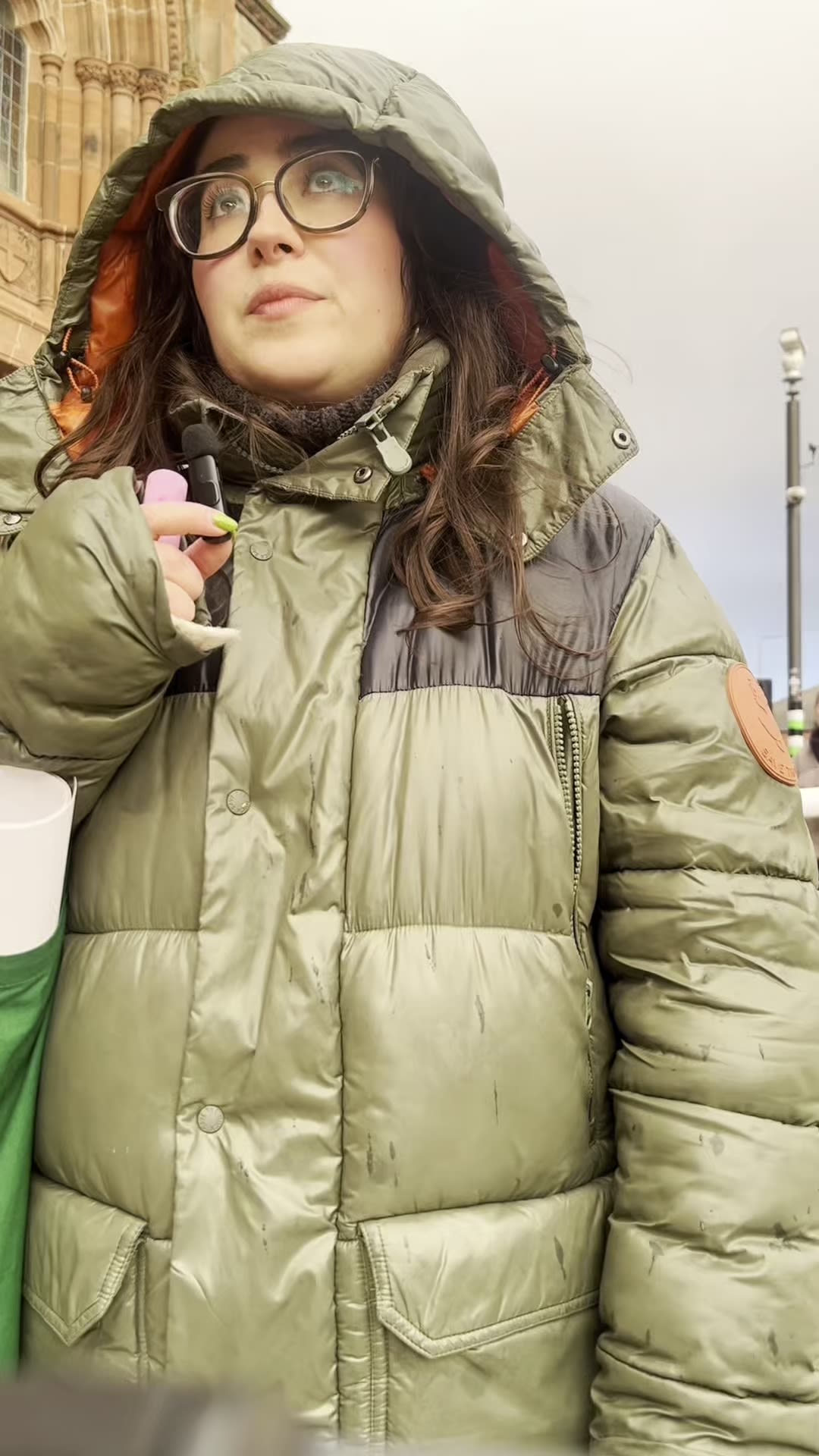
Ciara O'Connor-Pozo on her inspiration for fighting for women's rights
Ciara O'Connor-Pozo on her inspiration for fighting for women's rights
There is still hope for the future. Tracy Harrison shares some strides that have already been made towards a culture free from abuse and misogyny.
“Today, women are more likely to voice their experiences and seek support. This shift has been one of the most important changes we’ve witnessed.
“Misogyny is now recognised as a social issue, not a private one. Over the decades, we’ve seen stronger domestic‑abuse legislation, greater public awareness, more trauma informed approaches and more support organisations like Derry Well Woman.
“Women’s confidence and leadership have grown in areas like education, community leadership and in self-advocacy.”
WHSCT has run outreach programmes and information stands in partnership with the PSNI and Women’s Aid to provide information to victims of domestic violence. Scott said these stands are helpful to abuse victims who may not be ready at the time they come across them to leave a relationship.
“A woman and her child stopped at the table. I asked ‘Are you okay? Can I help you with anything?’ And she said she just wanted a leaflet to take with her and needed to know who to ring.
“You just don’t know where somebody might see a wee leaflet sitting and pick it up and keep it for when they’re ready.
“There are so many things that people, depending on their circumstances, have to think about before they make that call. They think about logistics and ‘If I say this and I’m not believed what happens to my babies?’”
It is clear that the women in the North are demanding change. On every level more needs to be done to protect them and create a society where they can be safe, respected and equal to men.
Tracy Harrison believes that the inclusion of women in these conversations is essential for achieving equality.
“Women must be included in shaping policy. Government should increase women’s representation in leadership, fund women’s community organisations and ensure women’s voices are central in peacebuilding and post‑conflict work. Equality requires both cultural and structural change.”
For women in the North words are not enough, action needs to be taken to ensure that the violence against women and girls cannot continue.
To see real change, Stormont must implement legislation that deters the violence, communities must speak out against abuses of power and people must recognise and challenge the biases that have been ingrained in them by a culture that has swept the poor treatment of women under the rug.
In her 1969 autobiography ‘The Price of my Soul’, Irish civil rights activist Bernadette Devlin wrote: “We were born into an unjust system; we are not prepared to grow old in it.”
The lingering message of fighting against systemic inequalities in the country still rings true today.
Resources
If you or someone you know has experienced domestic violence, you can reach out for support from the following organisations:
 Built with Shorthand